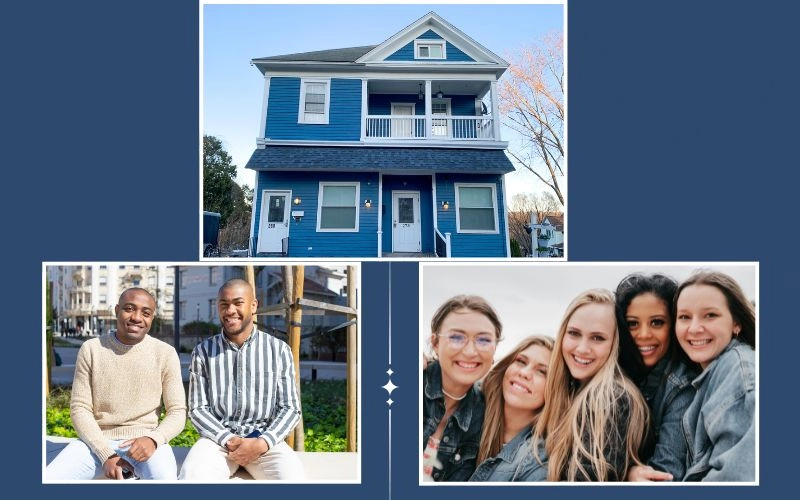
Exciting Update at 278 Onota Street, Pittsfield, MA
In order to build a stronger, more inclusive recovery community and better serve the growing needs of our community, we’re expanding our Pittsfield home to welcome both men and women, while maintaining separate, dedicated living spaces to ensure comfort, privacy, and safety for all residents.
What the Split Means for Men and Women in Pittsfield
- Women’s housing remains available. Our commitment to supporting women in recovery has not changed.
- The first floor will now serve men, creating new opportunities for those seeking a supportive sober living environment.
- Separate living areas ensure that both men and women can continue their recovery journeys in safe, structured, and empowering spaces.
Our Commitment
This change is not about reducing resources for women, it’s about expanding opportunities for everyone in need of a stable, recovery-focused home.
We remain dedicated to:
- Empowering women through compassionate, structured care
- Providing men with a safe, respectful, and supportive environment
- Strengthening the Pittsfield recovery community as a whole
Our Goal
To create a home that reflects inclusivity, respect, and hope, a place where everyone has the chance to rebuild their lives in recovery.
Frequently Asked Questions About Sober Living for Men and Women in Pittsfield
Can men and women live in the same sober living home?
Some recovery homes serve both men and women by giving each group its own dedicated living space. At 278 Onota Street in Pittsfield, the first floor now serves men while women’s housing remains on site, with separate areas that protect comfort, privacy, and safety for every resident in the home.
Why do sober living homes keep separate spaces for men and women?
Separate spaces let residents focus on recovery with peers who share similar experiences, and they protect privacy and a sense of safety. SAMHSA publishes guidance on the specific needs of women in substance use treatment, and many recovery homes reflect that by keeping women’s living areas distinct from men’s.
Are sober homes in Massachusetts certified?
Certification in Massachusetts is voluntary. State law directs the Bureau of Substance Addiction Services to run a training and accreditation program for sober home operators, and the Massachusetts Alliance for Sober Housing, a NARR affiliate, certifies homes. State agencies and their vendors may refer people only to certified sober homes.
What does a structured sober living home provide?
A structured sober living home offers a safe, substance-free place to live alongside peers in recovery. Residents follow house expectations, share responsibilities, and support one another while they work, attend meetings, and rebuild daily routines. SAMHSA describes recovery housing as an important support for people sustaining their recovery in the community.
How do I apply to a sober living home in Pittsfield?
You can apply online to a Vanderburgh Sober Living Chartered recovery home and receive a call back within 24 hours. You can also browse VSL homes to find the right fit, or call (844) 762-3747 on weekdays from 8 a.m. to 5 p.m. to talk through your options with the team.
Points to Remember
- Women’s housing remains available on site with compassionate, structured support.
- The first floor now serves men seeking a stable, recovery-focused sober home.
- Separate living areas ensure safe, respectful, and empowering recovery for all.
Take the next step
Apply, browse homes, or search the national directory.
Apply onlineGet a call back within 24 hours.View VSL homesSee Chartered recovery homes and find the right fit.Search the national directoryCertified sober houses anywhere in the US.
Or call (844) 762-3747, weekdays 8a to 5p.
Research & Sources
- Foote, H. T. (2026). Vanderburgh Sober Living Operating Climate Index, 2026 edition. Vanderburgh Sober Living. https://www.vanderburghhouse.com/research/operating-climate-index-2026/
- Massachusetts Alliance for Sober Housing. (n.d.). About us. https://mashsoberhousing.org/about-us/
- Massachusetts General Court. (n.d.). General Laws, Part I, Title II, Chapter 17, Section 18A: Voluntary training and accreditation program for operators of alcohol and drug free housing. https://malegislature.gov/Laws/GeneralLaws/PartI/TitleII/Chapter17/Section18A
- National Alliance for Recovery Residences. (2018). NARR standard 3.0. https://narronline.org/wp-content/uploads/2024/05/NARR-Standard-3.0.pdf
- Substance Abuse and Mental Health Services Administration. (2013). Substance abuse treatment: Addressing the specific needs of women (Publication No. SMA13-4788). https://library.samhsa.gov/product/substance-abuse-treatment-addressing-specific-needs-women/sma13-4788
- Substance Abuse and Mental Health Services Administration. (2023). Best practices for recovery housing (Publication No. PEP23-10-00-002). https://library.samhsa.gov/product/best-practices-recovery-housing/pep23-10-00-002