Discover a supported path to operating a sober living home without doing it alone.
Start in Recovery Housing Without Starting Alone
A softer path to becoming a sober living operator with Vanderburgh Sober Living
Starting a recovery home is meaningful work, but it can also feel overwhelming. Many people assume they need to secure a property, sign a lease, build systems, and take on full responsibility from day one.
That is not your only option.
At Vanderburgh Sober Living, we offer a more supported way to get started, one that allows you to gain experience, reduce risk, and grow into the role over time.
You Don’t Have to Launch Independently
If you’ve considered opening a sober living home, you may be unsure about:
- taking on full financial and legal responsibility immediately
- finding the right property
- building systems and processes from scratch
- learning how to operate a structured recovery home
A softer start can solve for this.
Two Ways to Get Started With VSL
Build Toward Your Own Operation
If your goal is to operate independently, VSL can help you move in that direction with structure, guidance, and access to opportunities, including connections to property owners and proven operating systems.
Start as a VSL Contract Operator
If you want a lower-risk entry point, the Contract Operator pathway allows you to operate within VSL’s framework while gaining hands-on experience. This is often the most practical way to begin.
Keep reading How to Certify a Sober House: An Overview of NARR Affiliate Certification What certification involves, what it costs, and how the process works in every state. →What Is a Contract Operator?
A Contract Operator is a short-term, partnered role designed to help you gain hands-on experience managing a recovery home while VSL provides the backbone support. Unlike independent operators – who commit to multi-year leases, handle their own legal matters, and assume full financial risk – contract operators work under a 6-12 month agreement with VSL, with potential to grow into full independence.
For many, this is a stepping stone to larger opportunities in recovery housing.
Day to day, a contract operator does the hands-on work that keeps a recovery home steady. That usually means running weekly house meetings, collecting rent, handling intakes and move-outs, coordinating drug screening, and responding when a resident needs support or a rule needs enforcing.
You will also work closely with house mentors, the residents who live in the home and help keep its routines on track. Consistent, fair enforcement of sober house rules is often the single most important skill a new operator builds during this period.
| Contract operator | Independent operator | |
|---|---|---|
| Commitment | 6–12 month agreement with VSL | Multi-year lease |
| Legal and compliance | Works within VSL’s compliance and certification structure | Handles own legal matters and compliance |
| Financial risk | Lower, with VSL providing back-end support | Full financial risk |
| Systems | Proven VSL operating systems | Builds systems and processes from scratch |
Why Contract Operating Is a Lower-Risk Start
- Lower risk: Avoid taking on full lease, compliance, and administrative burden upfront
- Real experience: Learn by actually operating a home
- Structured support: Work within proven systems instead of building everything from scratch
- Path to growth: Build toward future independent operation or expanded roles
Support for every stage
Pick the level of support that fits where you are.
Just getting startedSee how the sober living opportunity works and what starting with VSL looks like. LaunchpadGuided pre-launch program: one-on-one strategy, Academy training, weekly coaching, and templates. MasteryHands-on startup, certification, and operating support inside the Chartered Operator community.Questions first? Call (844) 762-3747, weekdays 8a to 5p.
What Support Does VSL Provide?
As a Contract Operator, you operate within a supported environment that includes:
- operational guidance and oversight
- administrative and back-end support
- established compliance and certification structure
- a more stable way to begin earning and growing
The certification structure matters because it gives residents, families, and referral sources a shared yardstick for quality. VSL homes operate under the National Alliance for Recovery Residences framework, and NARR Standard 3.0 sorts recovery residences into four levels of support, from peer-run Level I homes through clinical Level IV settings. Most sober houses in the VSL network fit the Level II, or monitored, model: structured house rules, peer accountability, and a house mentor in the home.
Working inside an existing certified structure means you learn the documentation, safety checks, and resident-rights policies that NARR certification requires before you ever have to assemble them yourself.
Who the Contract Operator Pathway Is For
This pathway may be a fit if:
- you want to work in recovery housing
- you’re not ready to start fully independently
- you want a structured, lower-risk entry point
- you’re open to growing into a larger role over time
Contract Operator vs. Independent Operator vs. Chartered Operator
The three roles differ mainly in who carries the lease, the legal exposure, and the long-term business. Here is how they compare.
- Contract operator: runs a home under a 6 to 12 month agreement inside VSL’s framework, with VSL carrying the backbone support.
- Independent operator: signs a multi-year lease or buys a property, handles legal matters, and assumes the full financial risk of the home.
- Chartered Operator: an independent operator who joins the VSL network through a charter while keeping ownership of the business.
A charter is a membership agreement between a home and a private network whose standards the home agrees to follow. It comes from the network rather than the state, it is voluntary, and no agency issues or revokes it. Oxford House, for example, charters homes that are democratically self-run, financially self-supporting, and required to remove a resident immediately on a return to use, with no paid staff in the house. Vanderburgh Sober Living charters independently operated homes into a cooperative network, where the operator keeps the business and gains the brand, operating standards, and startup and certification support described under charter membership.
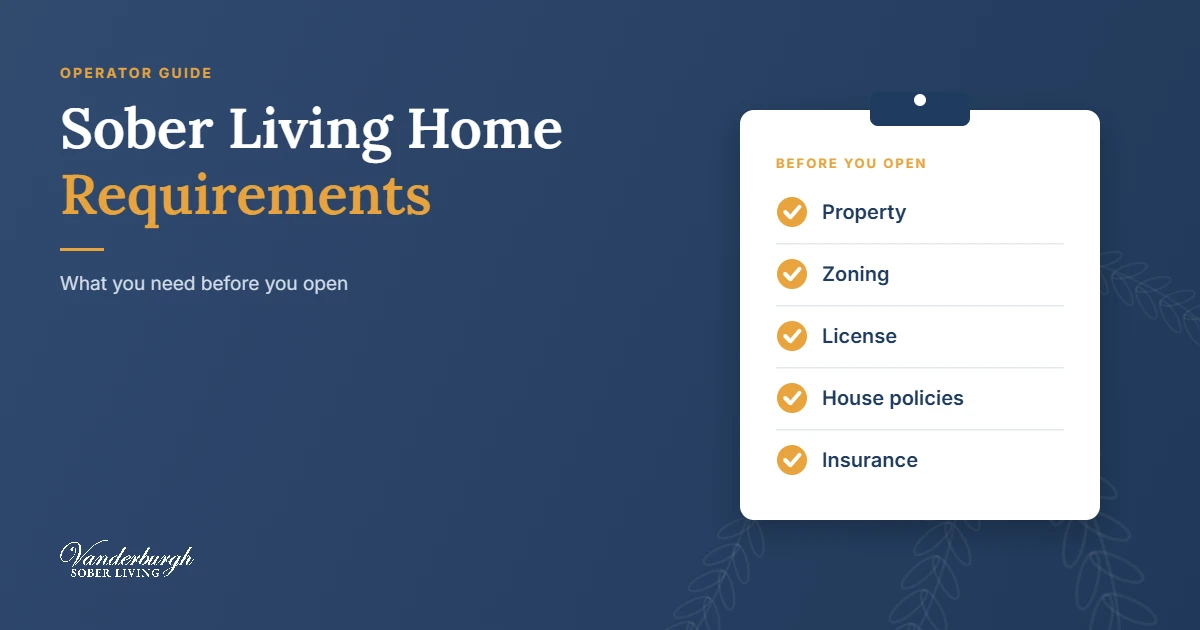
- ✓Policies and house agreements to have signed
- ✓Inspections, insurance, and intake paperwork
- ✓What the first week actually requires
Frequently Asked Questions About Becoming a Contract Operator
What is a contract sober house operator?
A contract sober house operator is a short-term, partnered role with Vanderburgh Sober Living. You manage a recovery home day to day while VSL provides the backbone support, including administrative help, a compliance and certification structure, and operational guidance, so you gain hands-on experience without carrying the full risk alone.
How long does a contract operator agreement with VSL last?
A contract operator agreement with VSL runs 6–12 months. That window gives you time to learn how a structured recovery home operates, build confidence in daily operations, and decide whether to move toward independent operation or an expanded role within VSL once the agreement ends.
Do contract operators have to sign a lease or buy a property?
No. Contract operators work within VSL’s framework instead of committing to a multi-year lease or handling their own legal matters. Independent operators take on the lease, compliance, and full financial risk, while the contract pathway lets you start operating without that upfront burden.
Can a contract operator become an independent sober living operator?
Yes. The contract role is designed as a stepping stone. After gaining experience inside VSL’s proven systems, a contract operator can grow into independent operation or a larger role, and VSL offers structure, guidance, and connections to property owners for operators who want to run their own homes.
Who is the contract operator pathway a good fit for?
The contract operator pathway fits people who want to work in recovery housing but are not ready to start fully independently. It suits someone looking for a structured, lower-risk entry point who wants to learn by operating a real home and is open to growing into a larger role over time.
Do I need to be in recovery to become a sober living operator?
No. Many successful operators have lived experience, and NARR’s social model values it, but plenty of people come to this work through family experience, real estate, or a commitment to their community. What matters most is reliability, fairness, and respect for residents. Some operators are drawn to it as a recovery housing social enterprise even without a personal recovery story.
Is a sober living operator the same as a treatment provider?
No. A sober house provides housing and peer support, not clinical treatment. Residents often attend outpatient treatment, mutual-aid meetings, or counseling elsewhere, and the operator’s job is to keep the home safe, structured, and substance-free while those services happen in the community.
Do fair housing laws apply to sober living homes?
Yes. The joint statement from HUD and the Department of Justice on land use and the Fair Housing Act explains that people recovering from addiction who are not currently using illegal drugs are protected as people with disabilities. That protection shapes how cities may regulate recovery homes and how operators should screen applicants.
How to Start as a VSL Contract Operator
You don’t need to have everything figured out to begin.
If you’re interested in recovery housing and want a more supported path, VSL offers a practical way to get started, whether that’s operating under an existing structure or building toward your own.
Apply to learn more about becoming a Contract Operator or joining VSL.
Start your sober house
Pick the path that fits where you are in the process.
Download the free guidePath to Purposeful Recovery Housing, by Dr. Hunter T. Foote.Explore the Mastery ProgramHands-on startup, certification, and operating support.See how starting with VSL worksThe opportunity, the community, and what a Charter includes.Prefer to talk now? Call (844) 762-3747, weekdays 8a to 5p.
Research & Sources
- U.S. Department of Housing and Urban Development & U.S. Department of Justice. (2016). Joint statement: State and local land use laws and practices and the application of the Fair Housing Act. https://www.justice.gov/opa/file/909906/dl
- National Alliance for Recovery Residences. (2018). NARR standard 3.0. https://narronline.org/standards/